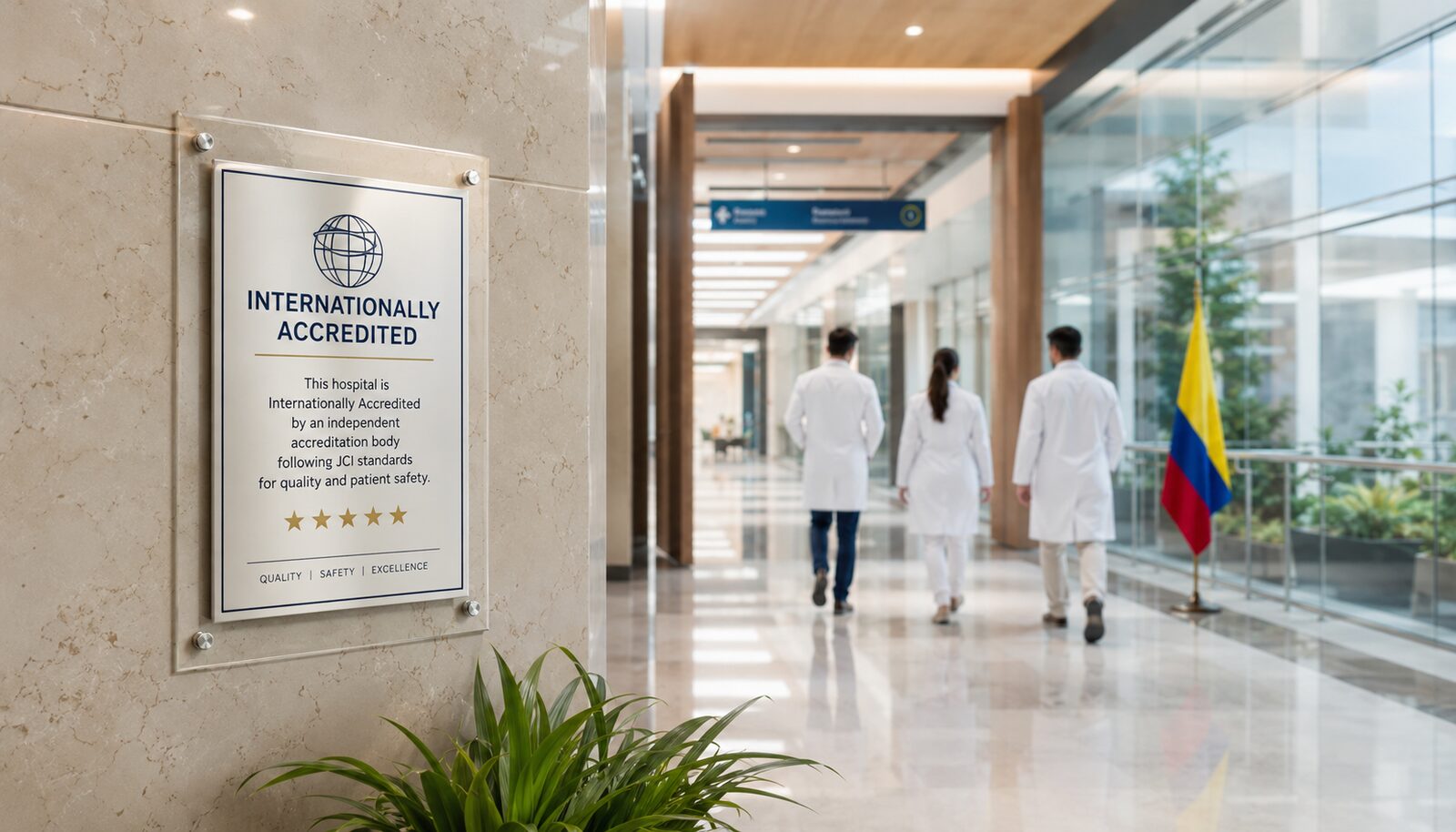
When patients consider travelling abroad for medical treatment, the first and most important question is always the same: will the quality of care match what I would receive at home? In Colombia, the answer is not just yes — it is demonstrably, measurably, independently verified yes.
Colombia's healthcare system has earned international recognition that places it ahead of the United States, Canada, and every other country in the Western Hemisphere. This is not marketing language. It is the conclusion of the World Health Organization, which ranked Colombia 22nd globally for overall healthcare system performance — the highest-ranked country in the Americas.
What JCI Accreditation Actually Means
Joint Commission International (JCI) accreditation is the gold standard for evaluating healthcare facilities worldwide. Based in the United States, JCI applies the same rigorous evaluation criteria to hospitals globally that The Joint Commission applies domestically to American hospitals.
A JCI-accredited facility has been independently evaluated across more than 1,200 measurable standards covering patient safety, infection control, medication management, surgical protocols, staff qualifications, emergency preparedness, and quality improvement processes. The evaluation is conducted on-site by international surveyors, and accreditation must be renewed every three years through re-evaluation.
Colombia currently has multiple JCI-accredited hospitals, placing it among the most accredited countries in all of Latin America. When combined with facilities holding national ICONTEC accreditation — Colombia's own rigorous quality certification system — the country has 61 or more accredited medical facilities across Bogotá, Medellín, Cali, and other cities.
ICONTEC (Instituto Colombiano de Normas Técnicas y Certificación) is Colombia's national standards and certification body. Its healthcare accreditation programme evaluates facilities against standards that are aligned with — and in some areas exceed — international benchmarks. ICONTEC accreditation is widely respected across Latin America and is recognised by the International Society for Quality in Health Care (ISQua).
How Colombia's Accreditation Compares
To put Colombia's accreditation landscape in perspective, consider that many popular medical tourism destinations have far fewer accredited facilities. Colombia's combination of JCI and ICONTEC-accredited hospitals creates a depth of quality infrastructure that few countries in the region can match.
More importantly, accreditation in Colombia is not limited to a handful of elite urban hospitals. Accredited facilities span multiple cities and specialties, meaning patients seeking everything from IVF to cosmetic surgery to dental implants can find accredited options within their specific field of care.
What Accreditation Means for You as a Patient
For international patients, accreditation provides concrete, verifiable assurance across several critical dimensions of care.
Patient Safety Protocols
Accredited facilities follow standardised patient identification procedures, surgical safety checklists (based on the WHO Surgical Safety Checklist), medication reconciliation protocols, and fall prevention measures. These are the same evidence-based safety practices used in top-tier US and European hospitals.
Infection Control
Accredited Colombian hospitals maintain rigorous infection prevention programmes including hand hygiene monitoring, sterilisation protocols for surgical instruments, isolation procedures for infectious patients, and surveillance systems that track hospital-acquired infection rates. These facilities report and benchmark their infection rates against international standards.
Staff Qualifications
JCI and ICONTEC accreditation require verified credentialing for all medical staff. This means every surgeon, anaesthesiologist, and nurse has had their education, training, licensure, and competency independently verified. Many Colombian specialists hold dual board certifications — one from Colombia's medical boards and additional certifications from American, European, or international specialty boards.
Continuous Quality Improvement
Accredited facilities are required to maintain active quality improvement programmes that track clinical outcomes, analyse adverse events, and implement corrective actions. This means the hospital does not just meet quality standards once — it continuously monitors and improves its performance.
Colombia's Top Accredited Institutions
Colombia's leading hospitals regularly appear in international rankings of the best healthcare facilities in Latin America. Institutions in Bogotá and Medellín consistently rank among the top hospitals on the continent for clinical excellence, patient safety, and innovation.
These are not small outpatient clinics. Colombia's top accredited hospitals are full-service, multi-specialty medical centres with hundreds of beds, dedicated international patient departments, on-site imaging and laboratory facilities, and 24/7 emergency services. Many have research programmes, medical school affiliations, and organ transplant capabilities — indicators of the highest level of institutional capability.
The WHO Ranking Explained
The World Health Organization's healthcare system ranking evaluates countries across multiple dimensions: overall health outcomes, responsiveness to patient expectations, fairness of financial contribution, and efficiency of resource use. Colombia's number-one ranking in the Western Hemisphere reflects not just the quality of its best hospitals, but the overall performance of its healthcare system as a whole.
This ranking accounts for factors that matter deeply to medical tourists: are patients treated with dignity? Are facilities responsive to individual needs? Is the system efficient in delivering care? Colombia scores exceptionally well across all of these dimensions.
Accreditation Is Your Due Diligence
We only connect patients with accredited facilities and board-certified specialists. When you inquire through Colombia Medical, we verify that the clinic or hospital recommended to you holds current JCI or ICONTEC accreditation and that your treating physician is fully credentialed in their specialty.
You should not have to take anyone's word for the quality of care you will receive. Accreditation provides independent, third-party verification — the same standard you would expect from a hospital at home.